How to Select a Mattress Which Suits Your Body
Sleep is essential, and the right mattress can be a game changer. If you've ever asked How to Select a Mattress or wondered which mattress is good for body, you're not alone.
Choosing the right mattress material can significantly influence sleep quality, posture, and long-term comfort. Among the most debated options today are latex foam and memory foam two materials that may look similar on the surface but behave very differently once you sleep on them.
Both foams are widely used in modern mattresses, yet they offer contrasting sleep experiences. One feels responsive and buoyant, keeping you lifted, while the other contours slowly, allowing you to sink in. Understanding these differences is essential for selecting the material that best suits your body, sleep habits, and environment.
This guide explains latex foam vs memory foam, their properties, benefits, drawbacks, and who each material is best suited for.
Latex mattresses are responsive, bouncy, and naturally cooling they give you a "floating on top" sensation with immediate pushback when you move. Memory foam mattresses are slow-responding and contouring they give you a "sinking into" sensation with deep pressure relief. Latex typically lasts 12-20 years and sleeps cooler but costs significantly more. Memory foam lasts 6-10 years, can trap heat (unless specially treated), but offers superior pressure point relief at a lower price.
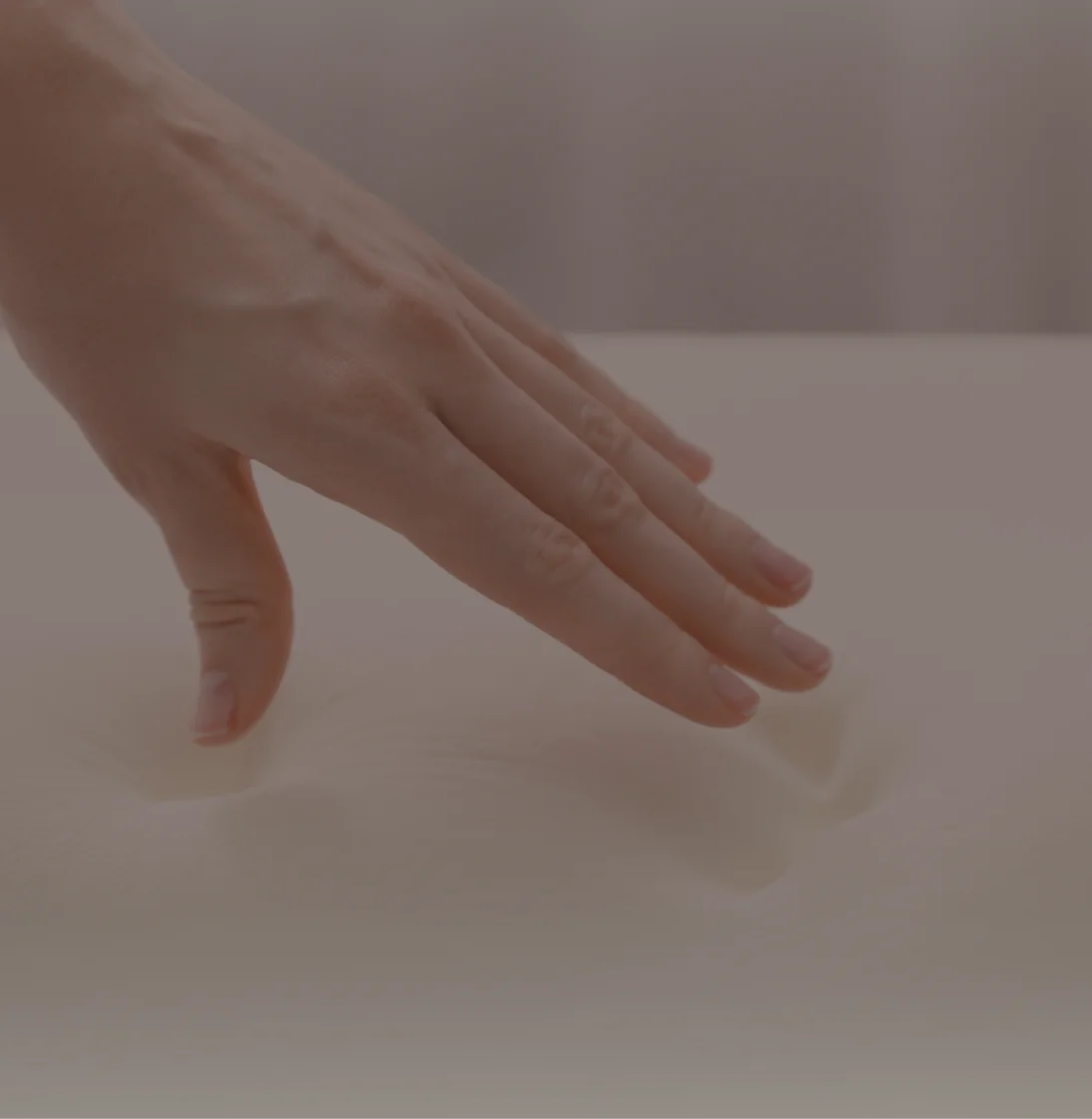
Memory foam is a viscoelastic polyurethane foam originally developed by NASA in the 1960s for crash protection. It's engineered to respond to heat and pressure by slowly conforming to your body shape, then slowly returning to its original form when pressure is removed.
How it works: When you lie on memory foam, your body heat softens the material. Combined with your body weight, the foam molds around your exact shape over several seconds. When you move, the foam takes 3-5 seconds to "remember" its original form and fill back in.
Key characteristics:
| Feature | Description |
|---|---|
| Material Source | Synthetic (petroleum-based polyurethane) |
| Response Time | Slow (3-5 seconds) |
| Feel | Contouring, cradling, "sinking in" |
| Density Range | 40-80+ kg/m³ (quality range) |
| Lifespan | 6-10 years |
| Temperature Behavior | Softens in heat, hardens in cold |
Common types in India:
Latex foam is made from rubber tree sap (natural latex) or synthetically manufactured to replicate that structure (synthetic latex). It's known for its responsive, bouncy support and natural cooling properties.
How it works: When you lie on latex foam, it compresses immediately under your weight, then instantly springs back when you move. There's no "memory" or slow response. The foam has a buoyant, elastic quality that provides support through resistance rather than contouring.
Key characteristics:
| Feature | Description |
|---|---|
| Material Source | Natural (rubber tree sap) or synthetic |
| Response Time | Instant (immediate bounce-back) |
| Feel | Buoyant, springy, "floating on top" |
| Density Range | 60-90+ kg/m³ |
| Lifespan | 12-20 years (natural lasts longer) |
| Temperature Behavior | Remains stable across temperatures |
Natural Latex (100% rubber tree sap):
Blended Latex (30-70% natural + synthetic):
Synthetic Latex (100% synthetic polyurethane):
Memory Foam:
Latex Foam:
Why this matters: Combination sleepers (who change positions frequently) find latex easier to move on. Side sleepers who stay in one position all night appreciate memory foam's deep contouring.
Memory Foam:
Latex Foam:
For back pain: Memory foam helps if pain is from pressure points. Latex helps if pain is from lack of firm support.
Memory Foam:
Latex Foam:
Critical for India: Latex has a massive advantage in Indian summers. Natural latex sleeps significantly cooler than even gel-infused memory foam. If you're a hot sleeper, latex is worth the premium.
Memory Foam:
Latex Foam:
For couples: Memory foam wins if motion disturbance is a priority. Latex is acceptable unless one partner is extremely sensitive to movement.
Memory Foam:
Latex Foam:
Cost per year over 15 years:
Latex's higher upfront cost often results in lower long-term cost.
Memory Foam:
Latex Foam (Natural):
For chemical sensitivities: Natural latex is the clear choice. Memory foam requires proper airing before use.
Memory Foam:
Latex Foam:
Why this matters: If you sit on the bed's edge frequently (putting on shoes, getting up), latex performs better.
Memory Foam ( Queen size):
Latex Foam (Queen size):
Latex costs 30-100% more than comparable-quality memory foam.
Pros:
Cons:
Pros:
Cons:
Best memory foam choice: High-density (60+ kg/m³) gel-infused memory foam with cooling cover.
Best latex choice: Natural or blended latex (at least 50% natural) with Dunlop core and Talalay comfort layer.
Many premium mattresses layer both materials:
This combination delivers memory foam's pressure relief without heat retention, paired with latex's cooling and longevity.
It depends on the cause of your back pain. Memory foam is better if your back pain stems from pressure points side sleepers with hip or shoulder issues, or anyone who wakes with numbness. Memory foam's contouring relieves pressure on specific points, reducing pain from compression.
Latex is better if your back pain stems from lack of support sagging mattresses causing lower back strain, or needing firmer resistance to maintain spinal alignment. Latex's responsive support prevents excessive sinking while maintaining spinal curves.
Yes, significantly. Natural latex's open-cell structure and pinhole construction allow continuous airflow, making it one of the coolest mattress materials available. Latex mattresses typically sleep 2-3°C cooler than standard memory foam.
Natural latex mattresses last 15-20 years, blended latex 12-15 years, and synthetic latex 10-12 years. Memory foam mattresses last 6-10 years depending on density. This durability difference significantly affects long-term value.
Natural latex costs 50-150% more than synthetic alternatives but offers clear advantages: longest lifespan (15-20 years vs 10-12 for synthetic), better breathability and cooling, naturally antimicrobial properties, eco-friendly and biodegradable, no off-gassing or chemical smell, and superior durability with minimal body impressions.
Discover the Hottest Fashion News and Trends Straight from the Runway
Sleep is essential, and the right mattress can be a game changer. If you've ever asked How to Select a Mattress or wondered which mattress is good for body, you're not alone.
Waking up with back pain every morning? Discover how to choose the best mattress for back pain in India. This expert-backed guide covers mattress firmness, materials, sleeping positions, and orthopedic recommendations to help you sleep pain-free.
When exploring latex vs memory foam mattress, it's not just about plush feel versus springy bounce—it's about how each material responds to your body, supports your spine, manages temperature, and holds up over time.
If you’ve ever bought a bed only to realise the mattress doesn’t quite fit, you know why a precise Mattress Size Chart India matters. This 2025 guide breaks down standard mattress sizes, quick conversions (inches ⇄ bed sizes in feet ⇄ cm), typical price bands, and how to choose the right bed dimensions for your room—without the hard sell.
A latex mattress is a sleep surface made with layers of latex foam, renowned for offering a bouncy, breathable, and durable sleeping experience.
If you’ve wondered what is memory foam mattress technology and whether it’s right for you, here’s a clear, researched guide. A Memory Foam Mattress uses viscoelastic polyurethane foam— first developed with NASA funding—to cushion the body by responding to heat and pressure, then slowly regaining its shape.
If you’ve ever typed Which Mattress is Good for Health into a search bar and still felt none the wiser, this guide is for you.
If you (or your partner) tend to overheat at night, a Cooling Bed Mattress can be a quiet game-changer. Heat raises wakefulness and cuts down deep and REM sleep, so getting temperature right isn’t a gimmick—it’s sleep science.
Choosing the right mattress size is crucial for a good night’s sleep. In India, two popular options are double beds and queen beds. In this blog, we’ll do a deep dive into double bed vs queen bed – exploring size differences, suitability for couples or singles, space requirements, and more.
Choosing between a Hard Mattress vs Soft Mattress is really about matching firmness to your body type, sleeping position, and any specific aches you wake up with. Firmness describes how soft or hard a bed feels, while support is whether the bed keeps your spine aligned—related, but not the same.
Explore different types of mattresses in India including memory foam, HR foam, pocket spring and hybrid. Compare pros, cons, prices, durability and climate suitability to choose the right mattress for your sleep needs.
Discover how orthopedic mattresses support spinal alignment, reduce back pain, relieve pressure points, and who benefits most from using one.
Learn what HR foam is, how it works, its characteristics, benefits, drawbacks, and how it compares to PU foam. A complete HR foam mattress buying guide.
Learn about air mattresses, how they work, different types, common uses, and how medical air mattresses help prevent and treat bedsores.
Foam vs spring mattress explained in detail. Compare durability, comfort, pros, cons, and use cases to choose the right mattress based on your sleep needs.
Learn what a high-density PU foam mattress is, ideal density levels, benefits, lifespan, and how to choose the right one for your body weight and sleep position.
Latex foam vs memory foam mattress compared on comfort, cooling, durability, pressure relief, and price. Find out which mattress material is right for you.